
The Wall and the Bet
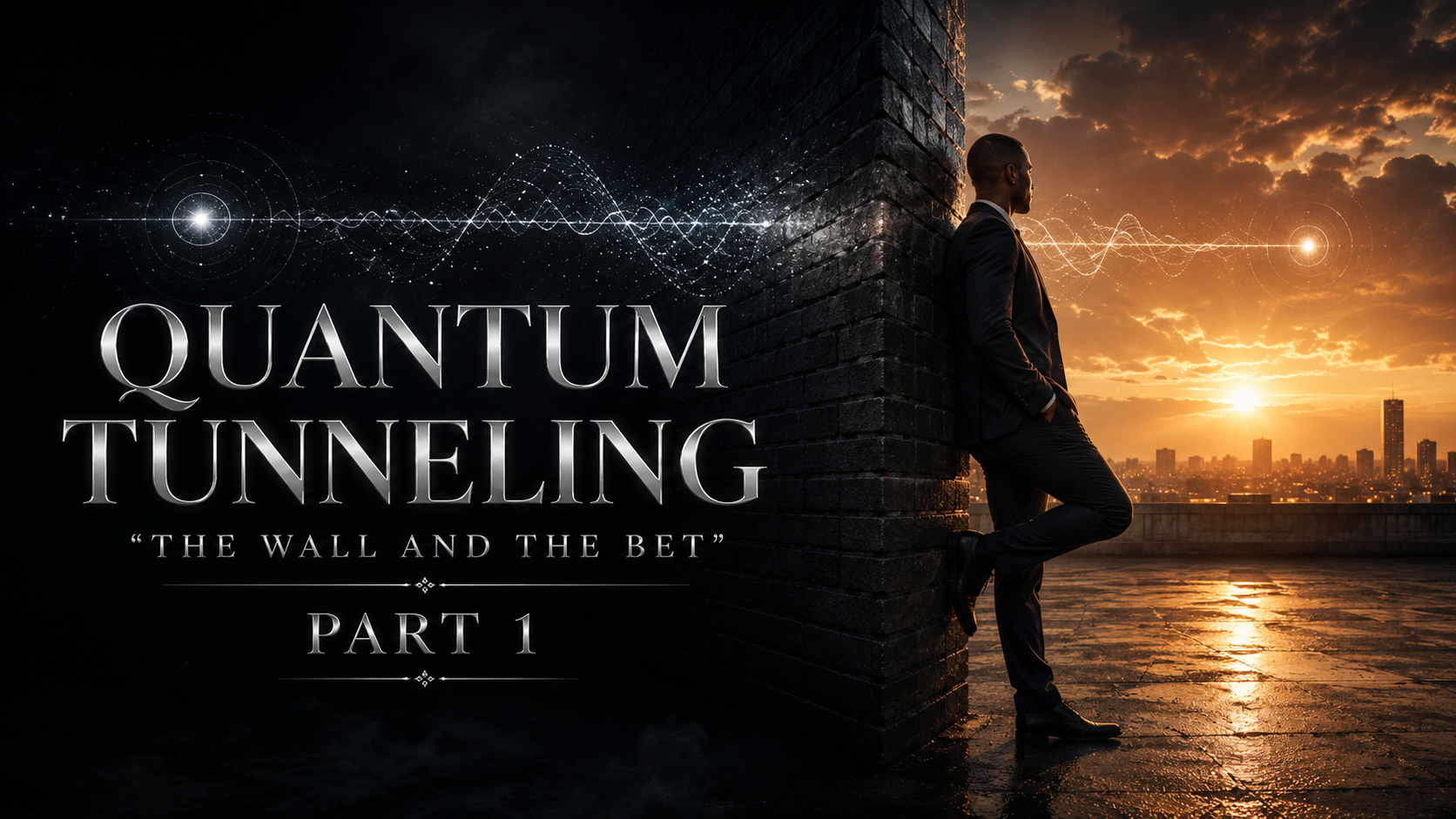
They built it in the dark, Emperor — brick by brick, for the man you used to be. This is the story of the wall, the bet, and why one of you is no longer standing in front of it.
The written decode below deepens the teaching.
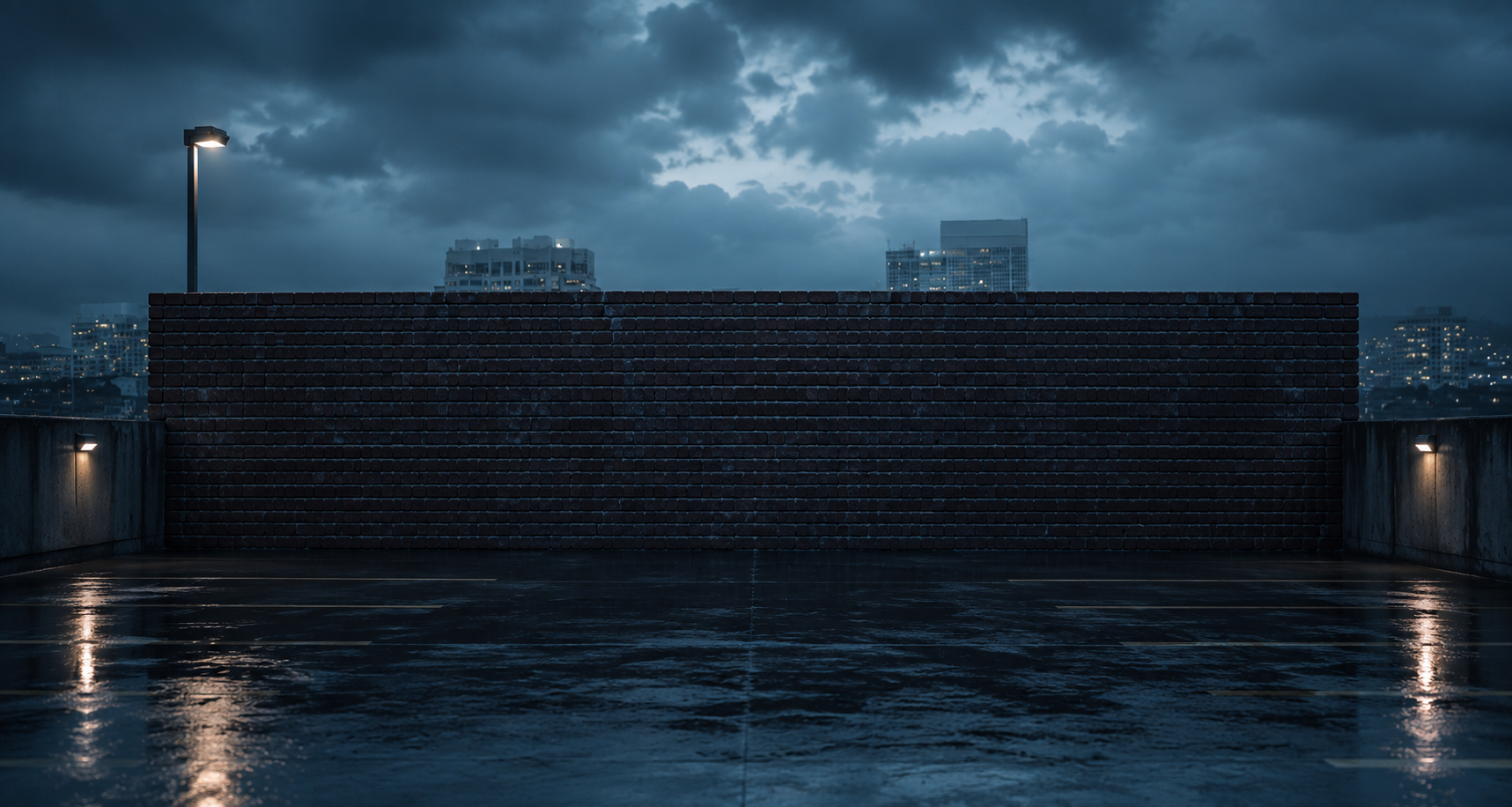
Hey Emperor. Before you press play on this one, walk with me. It's night on the top deck of a parking structure. Wet concrete. Sodium light. A man in a dark suit crossing the empty level, unhurried, phone in hand, mind on what he's building. He doesn't know it yet — but somewhere behind him, men are arriving with wheelbarrows.
They work while he walks. Brick by brick. In the dark. They never look at him, because the wall isn't personal to them — it's a job. A lawsuit. A campaign. A story about who he is, mortared together by people who need him standing still. And when he finally turns around, it's done: floor to ceiling, edge to edge, sealing the level shut. Massive. Agreed upon. Real.
So he does what a man does. He grips the brick and climbs. And the wall does what a wall does. He falls. He tries again — force against mass, effort against agreement — and force meets brick, and brick wins. It was always going to win. That's what it was built for. Every wall like this one is engineered for exactly one outcome: to convert a builder into a defender. To keep your hands on the brick and your eyes off your empire.
“The loss was never the wall. The loss is the time you spend in front of it.”
Then he stops. And this is the moment the whole teaching lives inside — the moment almost nobody films, because from the outside it looks like nothing. A man standing still in front of a wall. No strategy visible. No motion. But something on the far side has started to glow.

Here is what I will tell you, and no more: a stone that hits a wall bounces back, every time, forever — that's the classical world, and it's the only world the builders believe in. But a wave doesn't live entirely on one side of anything. And if any part of you already exists on the other side of that wall — really exists there, built there, concentrated there — then physics itself says there is a way through that doesn't involve climbing, breaking, or begging. He walks. The brick goes translucent. He passes through without disturbing a single stone.

And the wall remains. That's the part I need you to hold, because it separates this teaching from every counterfeit version of it. The wall doesn't crumble. The case is still filed. The story is still told. The men are still out there guarding it — brick intact, height intact, width intact — protecting a level of the structure that no longer contains him. The wall remains. He does not.
“They built the wall. You placed the bet.”
What I'm not going to do here.
I'm not going to teach you this in an article, Emperor. The full masterclass is four hours, and it earns every minute — because this is not a trick and it is not an escape. Quantum tunneling is not a get-out-of-jail-free card. It is a displacement of presence, and it costs everything the counterfeit versions skip: the wave has to be real. Many will call their avoidance “tunneling” and their paralysis “paid ahead.” The physics is not fooled and neither am I.
What I will give you is the map. Below is the full syllabus — thirteen parts, in the order I teach them. Read it before you watch, keep it beside you while you do, and you'll know exactly where you are in the architecture at every moment: the play, the characters you must refuse, the two silences, the physics itself, the structure of the barrier, the two voices, the man at the sea, the one who refused to cross, what happens to the wall — and what the trap becomes once you're gone.
Press play, Emperor. Part of you is already on the other side.